
In today’s competitive digital landscape, having a great product or service is not enough. Customers need to recognize your brand, remember it, and understand what makes it different from competitors. This is where brand visibility becomes important.
Brand visibility refers to how easily your target audience can see, recognize, and remember your business across different channels. A highly visible brand is more likely to attract attention, build trust, generate leads, and stay in customers’ minds when they are ready to make a purchase.
With consumers spending significant time online, businesses need a well-planned strategy to increase their visibility across search engines, social media platforms, websites, digital advertising, and other relevant channels.
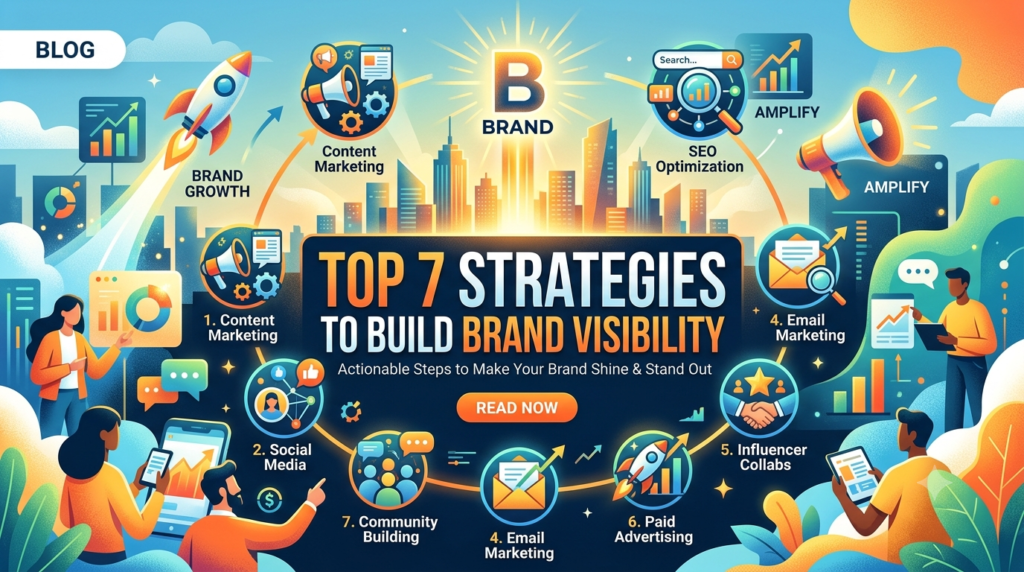
In this blog, we explore the top 7 strategies to build brand visibility and explain how businesses can use them to create a stronger and more recognizable digital presence.
What Is Brand Visibility?
Brand visibility is the extent to which customers can discover and recognize a business across various marketing channels.
For example, a customer may discover a company through a Google search, see its Instagram content later, read one of its blog posts, and eventually visit its website before making a purchase.
This repeated exposure helps create brand familiarity.
Brand visibility can be influenced by several factors, including:
- Search engine rankings
- Social media presence
- Content marketing
- Online advertising
- Brand consistency
- Customer reviews
- Website experience
- Public relations and partnerships
Building visibility is not about being everywhere. It is about being visible in the places where your target customers spend their time.
Top 7 Strategies To Build Brand Visibility
1. Build a Strong SEO Strategy
Search engine optimization (SEO) is one of the most effective ways to increase brand visibility online.
When potential customers search for products, services, or solutions related to your business, appearing prominently in search results can put your brand in front of them at the right moment.
A strong SEO strategy should include:
- Keyword research
- On-page SEO
- Technical SEO
- High-quality content
- Internal linking
- Image optimization
- Local SEO where relevant
- Website performance optimization
For example, a digital marketing agency can create useful content around topics such as SEO services, social media marketing, Google Ads, content marketing, and lead generation.
Over time, consistently publishing valuable content can help a business attract relevant organic traffic and increase brand awareness.
How to improve SEO visibility
Start by identifying the keywords your customers use when searching for your products or services. Create helpful pages and articles that address their needs and questions.
Avoid creating content solely for search engines. Focus on providing useful information that satisfies search intent.
2. Create Valuable and Consistent Content
Content marketing is another powerful strategy for building brand visibility.
Customers often search for information before purchasing a product or service. By creating helpful content, businesses can introduce their brand to potential customers before they are ready to buy.
Content can include:
- Blog posts
- Videos
- Infographics
- Case studies
- Guides
- Ebooks
- Social media posts
- Podcasts
- Webinars
- Email newsletters
For example, instead of constantly promoting a service, a company can publish educational articles that answer common customer questions.
Useful content can demonstrate expertise while providing value to the audience.
Consistency matters
Publishing content once and disappearing for several months makes it harder to build a recognizable presence.
Develop a realistic content calendar and maintain a consistent publishing schedule.
The goal is not simply to publish more content. The goal is to publish relevant, useful, and memorable content consistently.
3. Strengthen Your Social Media Presence
Social media platforms provide businesses with opportunities to reach existing customers and introduce their brands to new audiences.
A strong social media presence can increase brand awareness through regular content, conversations, shares, and community engagement.
Businesses can use platforms such as:
- YouTube
- X
The right platforms depend on your target audience and industry.
Create a recognizable social media identity
Use consistent:
- Brand colors
- Logo
- Typography
- Visual style
- Tone of voice
- Messaging
Consistency makes it easier for customers to recognize your content as belonging to your business.
Instead of posting only promotional messages, create a balanced content strategy that includes educational, entertaining, informative, and promotional content.
Most importantly, engage with your audience. Reply to comments, answer questions, acknowledge feedback, and participate in relevant conversations.
4. Use Paid Digital Advertising
Organic marketing strategies can take time to build momentum. Paid advertising can help businesses place their brand in front of specific audiences more quickly.
Depending on your goals, businesses can use platforms such as Google Ads and social media advertising.
Paid advertising can help increase visibility through:
- Search advertisements
- Display advertisements
- Video advertisements
- Social media campaigns
- Remarketing campaigns
- Lead-generation campaigns
One advantage of digital advertising is the ability to target audiences based on factors such as search intent, interests, demographics, location, or previous interactions.
However, simply spending more on advertising does not guarantee better results.
Successful advertising requires:
- Clear objectives
- Relevant audiences
- Strong ad copy
- Attractive creative assets
- Effective landing pages
- Conversion tracking
- Continuous optimization
Businesses should monitor campaign performance and adjust their strategies based on reliable data.
5. Develop a Strong and Consistent Brand Identity
Brand visibility is not only about getting noticed. It is also about being recognized.
A consistent brand identity helps customers associate specific visual and messaging elements with your business.
Your brand identity can include:
- Logo
- Colors
- Fonts
- Photography style
- Graphic design
- Brand voice
- Tagline
- Core messaging
For example, if your website uses one visual style while your social media profiles use completely different branding, customers may find it harder to identify your business.
Create brand guidelines that explain how your business should communicate visually and verbally across different platforms.
Focus on your unique value proposition
Your audience should quickly understand:
Who are you?
What do you offer?
Who do you help?
Why should customers consider your business?
A clear value proposition can make your brand messaging more memorable.
6. Leverage Influencer Marketing and Strategic Partnerships
Collaborating with relevant influencers, creators, businesses, or industry experts can help expose your brand to new audiences.
Influencer marketing does not always mean working with celebrities or accounts with millions of followers.
For many businesses, niche creators with a highly relevant and engaged audience may be more appropriate.
Possible collaboration formats include:
- Product reviews
- Educational videos
- Interviews
- Guest content
- Joint webinars
- Social media collaborations
- Co-branded campaigns
Strategic business partnerships can also increase visibility.
For example, two complementary businesses can collaborate on an educational webinar or create a joint promotional campaign.
The key is relevance. Choose partners whose audience overlaps with your target customers and whose reputation aligns with your brand.
7. Build Online Reputation and Customer Advocacy
Customer experiences can have a significant impact on how people perceive a brand.
Positive reviews, testimonials, case studies, referrals, and user-generated content can help increase trust while expanding your brand’s visibility.
Encourage satisfied customers to share genuine feedback about their experience.
You can showcase customer advocacy through:
- Google reviews
- Website testimonials
- Case studies
- Customer success stories
- Social media mentions
- User-generated content
- Referral programs
Businesses should also respond professionally to customer feedback.
A strong reputation does not come from marketing messages alone. It is built through the actual experiences customers have with your products, services, and support.
How to Measure Brand Visibility
Building brand visibility is an ongoing process. Businesses should track relevant metrics to understand whether their efforts are increasing awareness and reaching the right audience.
Important metrics can include:
Organic Search Visibility
Monitor search impressions, rankings, organic traffic, and branded search queries.
Social Media Reach
Track impressions, reach, engagement, shares, mentions, and follower growth.
Website Traffic
Analyze where visitors come from and which pages attract the most attention.
Brand Searches
An increase in searches for your company or brand name can provide useful insight into brand awareness.
Advertising Performance
Track impressions, click-through rate, conversions, cost per result, and other relevant advertising metrics.
Customer Reviews
Monitor the volume and quality of customer reviews and how customers respond to your business.
Using these metrics together provides a broader understanding of your brand visibility rather than relying on a single number.
Common Brand Visibility Mistakes To Avoid
While implementing brand visibility strategies, businesses should avoid several common mistakes.
Inconsistent branding: Using different logos, colors, messaging, and tones across platforms can weaken recognition.
Targeting everyone: Trying to reach every possible customer can make your marketing message too generic.
Ignoring SEO: Depending entirely on paid advertising can limit long-term organic visibility.
Posting without a strategy: Random social media content may generate activity without supporting business objectives.
Focusing only on promotion: Audiences generally benefit from educational and useful content rather than constant sales messages.
Not measuring results: Without analytics, it becomes difficult to identify which activities are contributing to visibility and business growth.
Conclusion
Building brand visibility requires more than simply increasing the number of advertisements or social media posts. Businesses need a consistent, customer-focused strategy across the digital channels that matter to their audience.
The top 7 strategies to build brand visibility include developing a strong SEO strategy, creating valuable content, strengthening social media presence, using paid advertising, maintaining a consistent brand identity, leveraging strategic partnerships, and building customer advocacy.
The most effective approach will depend on your industry, audience, competition, budget, and business goals.
Start with the channels most relevant to your customers, measure your performance, and continuously optimize your strategy. With consistent effort, your business can create a stronger digital presence and become easier for potential customers to discover and remember.